Can't Feel Chest on Bench Press? 5 Causes and Fixes
· 6 min read
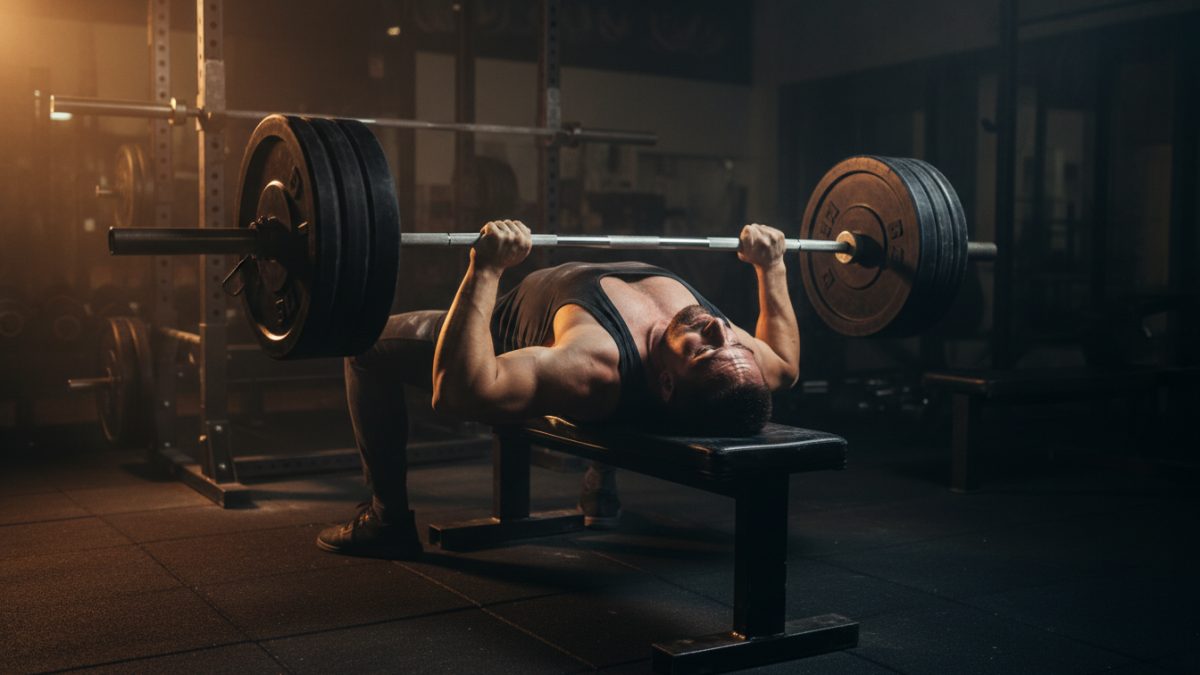
When you bench press, do your front shoulders and triceps fatigue long before your pecs do? Here are five common technical causes and how to fix each one.
You unrack the bar, lower it under control, and press through a tough set of ten repetitions, but your front shoulders and triceps give out long before your chest even warms up. If you can't feel chest on bench press, you are not alone; it is one of the most common complaints among gym lifters. The pectoral muscles help bring your upper arm across your body, yet small errors in setup, grip, and bar path can shift more of the work to your anterior deltoids and triceps.
1. Unlocked shoulder blades shifting load to the front deltoids
One common reason lifters struggle to feel their pecs is pressing with a flat, relaxed upper back. When your shoulder blades (scapulae) drift forward onto the bench pad, your shoulders sit in front of your chest. In that position, the anterior deltoid takes the brunt of the load from the moment the bar touches your chest.
The check: Look at your posture at the top of the lift. If your shoulders rise toward the ceiling at lockout and your chest sinks inward, your shoulder blades have unlocked.
The fix: Set a solid arch in your thoracic spine before unracking. Pull your shoulder blades down toward your back pockets (depression) and squeeze them tightly together (retraction). Think about pinching a pen between your shoulder blades and driving your upper back hard into the bench surface. Keep that shelf locked throughout the entire set—never push the bar so far at lockout that your shoulders roll forward.
2. A grip that is too narrow with flared elbows
Grip width changes your joint angles and can influence which muscles do more of the work. A grip that sits inside shoulder width turns the movement into a close-grip press, heavily loading the triceps. Conversely, gripping the bar wide while flaring your elbows out at a 90-degree angle to your torso places extreme stress on the shoulder capsule while shortening the chest's effective range of motion.
The check: Have a training partner film your set from directly behind your head. At the bottom of the movement, when the barbell touches your sternum, your forearms should be completely vertical to the floor. If your hands sit inside your elbows, your grip is too narrow; if your elbows flare straight out like the letter "T", your angles are off.
The fix: Adjust your grip so your forearms sit perpendicular to the ceiling at the bottom. As you lower the bar, tuck your elbows at roughly a 45 to 60-degree angle relative to your torso (resembling an arrow rather than a "T"). This alignment usually gives the chest a better mechanical position while keeping the shoulders in a more comfortable pressing path.
3. Bouncing the barbell off the sternum
Many lifters use momentum to launch the barbell off their chest. While this can let you move more weight, it usually reduces the amount of controlled tension your chest handles at the bottom of the rep.
The check: Watch the barbell when it touches your chest. If it drops quickly, sinks visibly into your sternum, and shoots up without a distinct transition, you are using momentum rather than muscular effort.
The fix: Introduce a crisp one-second pause at your chest on every rep. Lower the bar under control over two to three seconds, bring it to a dead stop on your lower sternum without letting your chest collapse, and press up by driving your feet into the floor. You may need to reduce the load slightly to maintain control, but the pause should make it easier to keep tension on the chest instead of relying on momentum.
4. Pressing without reaching a full pectoral stretch
For many lifters, chest training works better when reps are controlled through as much comfortable range of motion as they can use. If you stop several centimetres above your chest on every rep, the pecs may spend less time under tension near the bottom, and the movement can turn into more of a shortened-range press.
The check: Take a side-angle video. If the barbell reverses direction in mid-air above your ribcage, you are shortening the range of motion.
The fix: If your shoulder mobility allows it without joint discomfort, bring the bar to light contact with the lower chest on every rep. If you feel shoulder pain before you reach full depth, stop forcing the range and consider a variation such as a dumbbell press, or get your shoulder checked by a doctor or physiotherapist if the pain keeps happening. Dumbbells allow your hands to descend past your torso, granting a deeper pectoral stretch, and converge inward slightly at the top to match the natural path of horizontal shoulder adduction.
5. High volume on flat barbell press without isolation work
The standard flat barbell bench press is a compound movement where several muscles work together. If your triceps or anterior deltoids are stronger contributors in your press, your technique may drift toward those muscles when the load gets challenging, and your pecs may end up doing less of the work than you want.
The check: Your triceps and front shoulders feel pumped and exhausted after four sets of benching, but your chest feels untouched.
The fix: Balance your routine by pairing compound pressing with direct chest isolation. A simple option is to add two to three sets of cable flyes or pec-deck work after your main press, or to use them first as a light activation drill rather than a fatiguing pre-exhaust set. In FitroLab, a muscle-building plan can be set up with compound lifts at 4 sets of 6 to 10 reps with 150 seconds of rest, and isolation exercises at 3 sets of 10 to 15 reps with 90 seconds of rest.
| Exercise Type | Target Sets & Reps | Rest Period | Primary Benefit |
|---|---|---|---|
| Barbell / Dumbbell Press (Compound) | 4 x 6-10 | 150 s | Heavy mechanical tension and progressive overload |
| Cable Fly / Pec Deck (Isolation) | 3 x 10-15 | 90 s | Peak contraction and deep stretch without triceps |
| Incline Dumbbell Press (Compound) | 3-4 x 8-12 | 120 s | Emphasises the clavicular (upper) chest fibres |
What to do if you still can't feel chest on bench press
If you have corrected your shoulder blade position, adjusted your grip width, paused your reps, and added some direct chest work, but still do not feel much chest involvement, the flat barbell bench press may simply not be your best chest exercise. Limb length, ribcage shape, shoulder comfort, and pressing style can all affect how a movement feels from one person to another.
In that situation, try an alternative chest press for six to eight weeks: a low-incline dumbbell press set at about 15 to 30 degrees, a chest press machine, or, if your shoulders tolerate them well, dips with a slight forward torso lean. Track which variation gives you better chest stimulus with less shoulder discomfort.
If you experience sharp joint pain in your shoulders, wrists, or sternum while pressing rather than simple muscle fatigue, stop the exercise and consult a qualified physiotherapist or sports medicine physician to rule out underlying rotator cuff or labral issues. For a balanced training routine that fits your body mechanics and targets your chest effectively, create a personalised plan in FitroLab.
Free calculators for this topic
This article was written with AI and checked by an automated editor. It is general information, not medical advice: talk to a health professional before starting a new training or nutrition plan. How we write our articles