Glute Workout Routine: Complete Muscle-Building Guide
· 9 min read
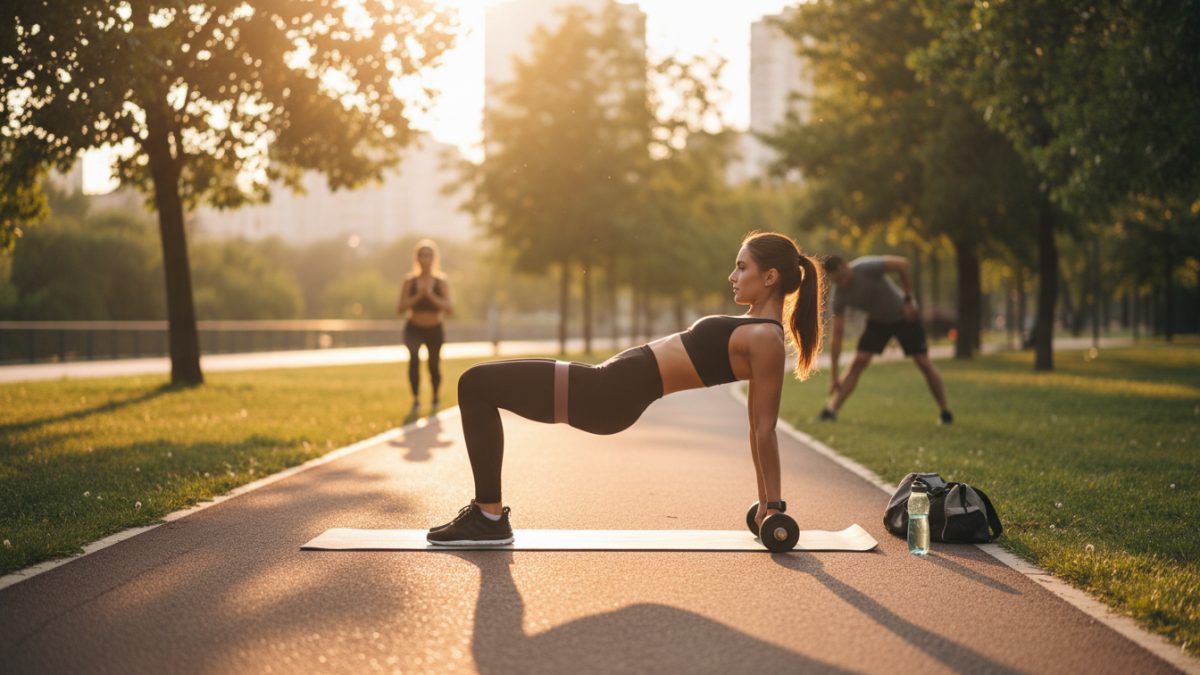
A complete glute workout routine targeting the upper and lower glutes with proven movement patterns, weekly volume guidelines, and gym or home setups.
Building stronger, more muscular glutes usually takes more than tacking a few sets of squats or lunges onto the end of leg day. A good glute workout routine combines hip thrust or bridge patterns, hinge work, single-leg lifts, and abduction work so the glutes are trained through different positions and functions. When you spread that work across the week and progress it over time, you give the glutes a clear reason to grow.
Glute Anatomy and Mechanical Tension
The gluteal complex consists of three distinct muscles that work together to stabilize the pelvis, extend the hips, and rotate the femur. Understanding how these muscles function helps you select exercises that load them across their full range of motion rather than relying on generic lower-body drills.
Gluteus Maximus
The gluteus maximus is the largest muscle in the human body. Its primary role is hip extension (driving the thigh backward), with secondary contributions to external rotation and hip abduction. It responds best to heavy loading in both shortened positions (such as hip thrusts and bridges) and lengthened positions (such as deep squats and Romanian deadlifts).
Gluteus Medius and Minimus
These smaller muscles sit on the upper, outer region of the pelvis. They are responsible for hip abduction (moving the leg out to the side) and internal/external hip stabilization during single-leg tasks. Training the medius and minimus creates stability for heavy compound lifts while building fullness across the upper shelf of the hip.
The Stretch vs. Shortened Position
Muscle growth is driven mainly by training hard enough and accumulating enough effective volume over time. In practice, it helps to include exercises that challenge the glutes in a lengthened position, such as Romanian deadlifts and split squats, and exercises that feel hardest near lockout, such as hip thrusts and bridges. A complete program usually benefits from both styles rather than relying on only one.
The 4 Movement Categories Every Plan Needs
To stimulate all glute fibres, your weekly training should draw from four biomechanical categories. Relying exclusively on one movement pattern leaves significant muscle growth on the table.
1. Horizontal Hip Extension (Peak Shortened Tension)
These movements load the hips horizontally, meaning maximum resistance occurs at lockout when the glutes contract hardest.
- Barbell hip thrust
- Kas glute bridge
- Cable pull-through
- Single-leg hip thrust
2. Lengthened Hinges (Peak Stretched Tension)
These exercises load the glutes when the hips are bent and can be useful for building strength and size.
- Romanian deadlift (barbell or dumbbell)
- 45-degree back extension with a glute-focused setup
- Good morning or cable pull-through
3. Unilateral and Squat Patterns (Deep Flexion and Stability)
Single-leg and squat variations demand pelvic stability while taking the hip through deep degrees of flexion.
- Deficit Bulgarian split squat (torso leaning forward)
- Walking lunges (long stride length)
- Deep leg press (feet high and wide on the platform)
4. Hip Abduction (Upper Glute Isolation)
Abduction movements isolate the gluteus medius and minimus to build pelvic stability and lateral hip volume.
- Seated machine hip abduction (torso hinged slightly forward)
- Standing cable hip abduction
- Side-lying dumbbell leg raise
Complete Glute Workout Routine: 2-Day Gym Plan
Spreading your glute volume across two non-consecutive days per week yields higher training quality than cramming all sets into a single exhausting session. This layout pairs heavy compound movements with targeted isolation work, allowing complete recovery between sessions.
| Day | Exercise | Sets | Reps | Rest |
|---|---|---|---|---|
| Day 1: Heavy Thrust & Stretch | Barbell Hip Thrust | 4 | 6–10 | 150 s |
| Dumbbell Romanian Deadlift | 4 | 8–10 | 150 s | |
| Deficit Bulgarian Split Squat | 3 | 8–10 / leg | 120 s | |
| Seated Cable or Machine Abduction | 3 | 12–15 | 90 s | |
| Day 2: Hinge, Squat & Upper Glute | 45° Back Extension (glute-focused setup) | 4 | 10–12 | 120 s |
| Leg Press | 4 | 8–10 | 150 s | |
| Standing Cable Hip Abduction | 3 | 12–15 / leg | 90 s | |
| Constant-Tension Frog Pumps or Kas Bridge | 3 | 15–20 | 60 s |
Day 1 Execution Notes
Start with the barbell hip thrust to overload the glutes with heavy weight while your nervous system is fresh. Keep your ribs pulled down and tuck your pelvis into a posterior pelvic tilt at the top of every rep. Move to the dumbbell Romanian deadlift, focusing on pushing your hips straight back toward the wall behind you until you feel a deep stretch in the glute-hamstring tie-in.
Finish with Bulgarian split squats using a forward torso lean to keep the mechanical work on the front glute, followed by seated abductions taken within one or two reps of technical failure.
Day 2 Execution Notes
Begin with 45-degree back extensions set up to bias the glutes: keep your spine neutral, brace your midsection, and think about driving the hips into the pad as you extend. On the leg press, use a stance that lets you reach a comfortable depth with your whole foot planted and your lower back staying stable against the pad.
Finish the workout with standing cable abductions, then close with high-rep bridges or frog pumps for a simple glute finisher.
Home Glute Workout Routine: Dumbbell and Resistance Band Plan
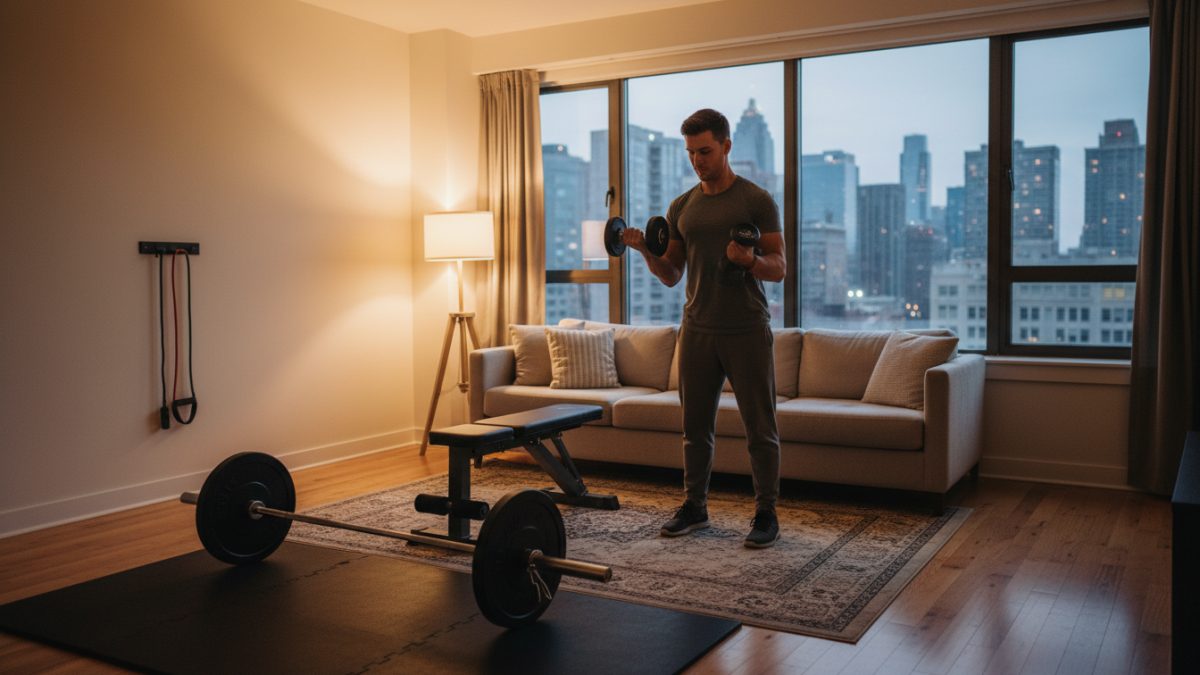
If you train at home with limited equipment, you can achieve substantial glute growth by maximizing time under tension, incorporating pauses at peak contraction, and utilizing unilateral exercises to double the effective load.
Home Session A (Hinge and Contraction Focus)
- Dumbbell B-Stance Romanian Deadlift: 4 sets of 8–10 reps per leg. Keep 90% of your body weight on the working front leg while the rear toe acts as a kickstand for balance. Rest 90 seconds between legs.
- Dumbbell Hip Thrust (Back on Couch or Bench): 4 sets of 10–12 reps. Place a dumbbell across your hips if it feels stable and comfortable, and add a 2-second pause at the top of each rep. Rest 90 seconds.
- Banded Side Plank Clamshell: 3 sets of 12–15 reps per side. Place a heavy mini-band just above your knees, raise your hips into a side plank, and abduct the top knee without rotating your lower back. Rest 60 seconds.
Home Session B (Unilateral Depth and Burnout)
- Elevated Front-Foot Bulgarian Split Squat: 4 sets of 8–10 reps per leg. Place your front foot on a 2-inch to 3-inch [5 cm to 8 cm] block or thick book to deepen hip flexion at the bottom. Rest 90 seconds.
- Single-Leg Romanian Deadlift: 3 sets of 10–12 reps per leg. Use one dumbbell held in the opposite hand of the working leg to load the glute while challenging rotational control. Rest 60 seconds.
- Banded Lateral Monster Walks: 3 sets of 20 steps per direction. Keep a heavy mini-band around your mid-foot (not your ankles) to force active hip external rotation throughout the set. Rest 60 seconds.
Technique Cues to Target the Glutes Over the Quads and Lower Back
Many lifters struggle to feel their glutes working because the lower back, hamstrings, or quads end up doing more of the effort than intended. Small setup changes can help, but they should make the exercise feel more stable and repeatable rather than forcing one exact body position.
1. Pelvic Position and Rib Flare
Excessive lower-back arching during hip thrusts can make the movement less comfortable and less stable. Keep your ribs stacked over your pelvis, brace your abdominals, and finish the rep by extending the hips rather than by leaning back through your spine.
2. Forward Torso Lean on Single-Leg Drills
In lunges and split squats, a small forward torso lean often helps many lifters feel the front glute more, while a more upright torso usually involves the quads more. Use the lean that lets you stay balanced, keep pressure through the whole front foot, and move without knee or back discomfort.
3. Foot Placement on Hip Thrusts
Position your feet so that your shins are completely vertical (90 degrees to the floor) at the top lockout of the thrust. If your feet are too far out, your hamstrings will cramp and dominate the lift. If your feet are too close to your hips, your quadriceps will take over the push.
4. Directing Resistance Behind the Hips on Hinges
A common mistake during Romanian deadlifts is bending down toward the floor. Instead, think of your hips as a drawer you are sliding backward. The downward movement of the barbell or dumbbells should simply be a byproduct of your pelvis traveling rearward.
Managing Weekly Sets and Load Progression
Glute growth requires enough weekly work to improve, without so much that performance drops from session to session. For many lifters, roughly 8 to 20 hard weekly sets for glute-focused work is a useful starting range, then you can adjust up or down based on soreness, performance, and recovery.
FitroLab's plan builder uses the app's build-muscle defaults of 4 sets of 6–10 reps for compound lifts with 150 seconds of rest, and 3 sets of 10–15 reps for isolation lifts with 90 seconds of rest. It also aims for 12 to 36 weekly working sets for legs overall, which can help you organize lower-body training when glutes are a priority.
To keep progressing, try to add reps first, then load when you hit the top of the rep range with solid form. For example, if you can complete 4 sets of 10 hip thrusts cleanly, add a small amount of weight next time and build back up within the prescribed range.
Frequently asked questions
How many times per week should I train my glutes for maximum growth?
Training glutes 2 to 3 times per week is optimal for most lifters. Splitting your weekly volume across multiple workouts maintains higher movement quality, allows you to lift heavier loads per set, and reduces excessive delayed onset muscle soreness (DOMS).
Can I grow my glutes without doing heavy barbell squats?
Yes. Squats can help build the glutes, but they are not mandatory. Hip thrusts, Romanian deadlifts, split squats, leg presses, and back extensions can all be effective options in a glute-focused program.
Why do I only feel hip thrusts in my lower back or quads?
Lower back discomfort usually stems from arching the spine at the top rather than driving through the hips with a tucked pelvis. Quad dominance occurs when your feet are placed too close to your glutes; adjust your stance forward until your shins form a vertical 90-degree angle at full lockout.
How long does it take to see visible glute hypertrophy?
It depends on your training history, nutrition, sleep, and starting point. Many people notice performance improvements within a few weeks, while visible muscle growth usually takes longer and is best judged over several months of consistent training.
If you want a workout plan tailored to your equipment, schedule, and goal, you can build one with FitroLab.
Free calculators for this topic
This article was written with AI and checked by an automated editor. It is general information, not medical advice: talk to a health professional before starting a new training or nutrition plan. How we write our articles