Weight Loss Meal Plan: How to Cut Fat Without Starving
· 11 min read

Learn how to build a realistic weight loss meal plan that keeps you full, preserves muscle, and delivers consistent results without crash dieting.
Building a realistic weight loss meal plan does not require severe calorie restriction, bland food, or enduring constant hunger. Sustainable fat loss comes down to managing energy balance while choosing nutrient-dense foods that support your energy levels and lean muscle. When you structure your daily meals around a moderate calorie deficit, plenty of protein, and high-volume whole foods, shedding body fat feels manageable rather than exhausting.
Setting an achievable calorie deficit
Every effective fat loss strategy relies on an energy deficit, meaning you consume fewer calories than your body burns through basal metabolism, daily movement, and workouts. The size of that deficit dictates whether your plan feels sustainable or overwhelming.
Why aggressive deficits backfire
Cutting calories drastically often produces a quick drop on the scale, but much of that initial change comes from water, stored glycogen, and lean muscle tissue. Very low energy intakes raise hunger signals, cause lethargy, and lower spontaneous daily movement. When energy intake drops too low, non-exercise activity thermogenesis (NEAT)—the casual pacing, fidgeting, and walking you do each day—often decreases, which can lower total daily energy expenditure.
Severe deficits also increase cravings, making weekend overeating far more likely. A gradual approach preserves your muscle, keeps your strength workouts productive, and helps you build eating routines you can stick with for months.
Finding your target energy range
A practical deficit sits around 300 to 500 calories below your daily maintenance level. This range often yields a steady rate of loss of about 0.25 to 0.75 kg (0.5 to 1.5 lb) per week, depending on body size, activity, and how accurately intake is tracked.
To establish a starting target:
- Estimate maintenance by multiplying your current body weight in pounds by 14 to 16 (or roughly 31 to 35 calories per kilogram), depending on your daily physical activity.
- Subtract 350 to 500 calories from that baseline.
- Monitor your average body weight across two to three weeks before deciding if you need to adjust.
For example, an individual weighing 180 lb (81.5 kg) who works an office job and trains three times per week might maintain weight at roughly 2,500 calories. An intake of 2,000 to 2,100 calories creates a steady deficit without compromising recovery or daily productivity.
Dialling in your macronutrients for satiety and muscle
While total calories determine whether weight goes up or down, your macronutrient breakdown determines how full you feel and whether you lose fat rather than muscle.
Prioritising daily protein
Protein is the anchor of any fat loss diet. It has the highest thermic effect of food, meaning your body uses more energy to break down protein than it does for fats or carbohydrates. More importantly, protein protects existing muscle tissue during a deficit and triggers satiety hormones in the digestive tract.
Aim for 1.6 to 2.2 grams of protein per kilogram of body weight (roughly 0.7 to 1.0 gram per pound). If you have significant weight to lose, calculating this range using your target body weight provides plenty of amino acids without requiring excess volume.
Reliable protein staples include:
- Skinless chicken breast and turkey breast
- Extra-lean ground beef (90% or leaner) and pork tenderloin
- Canned tuna, salmon, haddock, and cod
- Plain 0% or 2% Greek yoghurt and skyr
- Low-fat cottage cheese
- Whole eggs and liquid egg whites
- Tofu, tempeh, lentils, and edamame
- Whey or plant-based protein powders
Selecting fibre-rich carbohydrates
Carbohydrates fuel hard training sessions in the gym and support healthy hormone levels. Rather than cutting carbs out, centre your choices on unrefined sources packed with dietary fibre. Canada's Food Guide emphasizes whole grains and plenty of produce to support gut health and steady energy. A practical target for many adults is about 25 to 38 grams of fibre per day, depending on age, sex, and energy intake. Higher-fibre meals can slow digestion and help with fullness.
Build your carbohydrate intake around rolled oats, brown rice, quinoa, sweet potatoes, baby potatoes, and whole-grain bread, paired with generous servings of berries, apples, and vegetables.
Protecting baseline health with essential fats
Dietary fat supports vitamin absorption and hormone production, and it can help meals feel more satisfying. Dropping fat intake too low can leave you feeling fatigued and irritable. Keep dietary fats between 20 and 30 percent of your total daily calories (roughly 0.6 to 1.0 gram per kilogram of body weight). Focus on olive oil, avocados, raw nuts, seeds, and the fats present in eggs and oily fish.
High-volume eating strategies to curb hunger
Volume eating means choosing foods with high water and fibre content relative to their calorie density. This lets you fill your plate and satisfy physical hunger cues without exceeding your daily energy target.
| High-Calorie Option (Lower Volume) | Low-Calorie Swap (Higher Volume) |
|---|---|
| 50 g Potato chips (~270 kcal) | 300 g Boiled mini potatoes (~260 kcal) |
| 35 g Peanut butter (~205 kcal) | 200 g 0% Plain Greek yoghurt (~115 kcal) |
| 100 g Regular dry pasta (~360 kcal) | 50 g Pasta + 200 g Zucchini ribbons (~220 kcal) |
| 45 ml Creamy dressing (~210 kcal) | 10 ml Olive oil + fresh lemon juice (~85 kcal) |
| 250 ml Fruit juice (~110 kcal) | 1 Whole orange + large glass of water (~65 kcal) |
Daily habits for appetite control
- Fill half your plate with vegetables: Leafy greens, broccoli, zucchini, cauliflower, and green beans take up substantial physical space in the stomach, signalling fullness to your brain.
- Drink water regularly: Having a glass of water before meals may help some people feel more comfortable and can be a simple way to stay hydrated, but it is not a magic appetite fix.
- Stick to whole foods over liquids: Smoothies and juices pass through the digestive system quickly. Chewing whole proteins, fruits, and vegetables keeps you satiated for hours longer.
- Distribute protein evenly: Spreading your protein across three or four meals (25 to 45 grams per meal) helps maintain steady satiety throughout the day.
A practical 7-day weight loss meal plan
The following 7-day framework shows one way a weight loss meal plan might look in practice. Daily calories and protein will vary with your body size, activity, and preferences, so adjust portion sizes and food choices to suit your own targets.
| Day | Breakfast | Lunch | Snack | Dinner |
|---|---|---|---|---|
| Monday | 50 g rolled oats, 1 scoop whey protein, 100 g frozen blueberries, 10 g chia seeds | Chicken wrap: 120 g chicken breast, whole-wheat wrap, 30 g light feta, mixed greens, sliced tomato | 200 g 0% Greek yoghurt with 1 sliced apple and cinnamon | 150 g baked salmon, 200 g roasted sweet potato wedges, generous steamed broccoli |
| Tuesday | 2 whole eggs, 100 ml egg whites scrambled with spinach and mushrooms; 2 slices whole-grain toast | Grain bowl: 140 g cooked quinoa, 120 g black beans, 100 g diced bell pepper, 40 g avocado, salsa | 1 medium banana and 20 g raw almonds | 160 g extra-lean ground turkey stir-fry with snap peas, cabbage, soy sauce, and 120 g cooked jasmine rice |
| Wednesday | 200 g 2% cottage cheese topped with 120 g strawberries and 20 g chopped walnuts | Turkey sandwich: 130 g deli turkey breast, 2 slices rye bread, mustard, cucumber slices, side garden salad | 1 scoop protein powder mixed with cold water, 1 crisp pear | 170 g baked cod, 220 g boiled baby potatoes, roasted asparagus with 5 ml olive oil |
| Thursday | Protein pancakes: 50 g oat flour, 1 scoop whey, 1 egg, 50 ml unsweetened almond milk; topped with 80 g raspberries | Chicken salad: 140 g grilled chicken breast, 150 g mixed greens, cucumber, cherry tomatoes, 15 ml light dressing | 2 hard-boiled eggs with baby carrots and 30 g hummus | 160 g lean beef sirloin strips, sautéed peppers and onions, 130 g brown rice, fresh cilantro |
| Friday | 60 g quick oats with 120 g liquid egg whites cooked in for volume, cinnamon, 1 diced pear | Lentil soup: 200 g cooked green lentils in tomato broth with carrots and celery; 1 slice whole-wheat toast | 150 g 0% Greek yoghurt with 15 g powdered peanut butter | 160 g air-fried chicken breast, 200 g roasted squash cubes, large serving of steamed green beans |
| Saturday | 2 poached eggs on 2 slices sprouted grain toast, 40 g sliced avocado, sliced tomatoes | Warm quinoa and leftover chicken bowl with shredded kale and lemon-tahini drizzle | 1 high-protein snack bar (~200 kcal, 20 g protein), 1 orange | Homemade burger: 150 g extra-lean beef patty, whole-wheat bun, lettuce, pickles, 200 g baked carrot fries |
| Sunday | Protein smoothie: 250 ml unsweetened soy milk, 1 scoop protein powder, 1 frozen banana, 30 g baby spinach | Tuna pasta salad: 1 can chunk light tuna, 60 g dry whole-wheat pasta (cooked), diced celery, 15 g light mayo | 150 g cottage cheese with sliced cucumber and cracked black pepper | 160 g skinless baked chicken thighs, 180 g baked potato with 15 g light sour cream, roasted Brussels sprouts |
Winter batch cooking and Canadian grocery budgeting
Long Canadian winters often bring cravings for warm, heavy comfort foods. When temperatures drop below freezing, cold salads can lose their appeal. Adapting your meal prep to warm, nutrient-dense dishes makes staying consistent straightforward year-round.
Warm batch cooking staples
- Slow-cooker beef or turkey chili: Combine extra-lean ground meat with kidney beans, diced canned tomatoes, onions, and bell peppers. A single pot yields four to five warm, high-protein meals that reheat well.
- Lean root vegetable stews: Simmer lean beef stew cubes or skinless chicken thighs with carrots, turnips, and potatoes in low-sodium broth with fresh herbs.
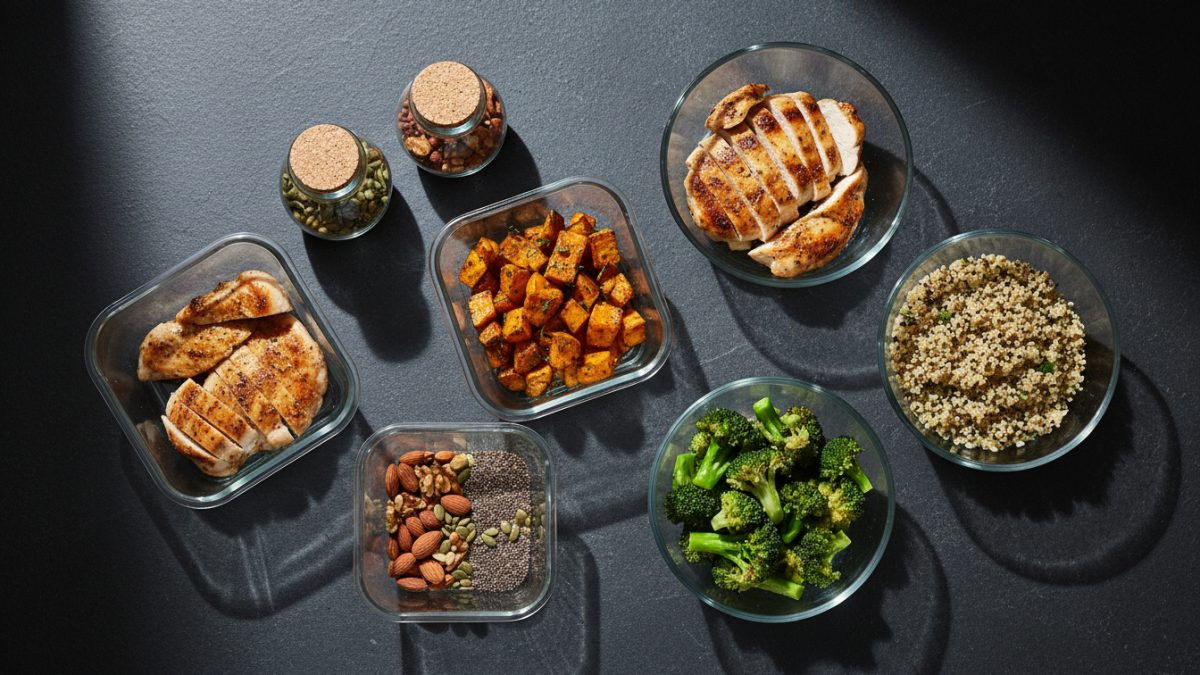
- Sheet-pan roasted protein and vegetables: Roast trays of seasoned chicken breast, diced sweet potatoes, and Brussels sprouts at 200°C for easy weekday lunch assemblies.
Keeping your grocery bill reasonable
Eating a high-protein diet does not require high grocery spending. A few practical shopping adjustments can keep costs in check:
- Rely on frozen produce: Frozen berries, green beans, spinach, and broccoli florets are flash-frozen at harvest, preserve their nutritional quality, cost less than off-season fresh imports, and do not spoil.
- Use affordable plant proteins: Canned beans, chickpeas, and dried lentils provide high-fibre carbohydrate and protein sources for only a couple of dollars per meal.
- Choose store-brand items: Store-brand oats, canned fish, Greek yoghurt, eggs, and frozen poultry provide identical nutrition to brand-name alternatives at a lower price point.
How to adjust when your fat loss stalls
Body weight fluctuations are normal. Over several weeks or months of dieting, you will likely experience periods where scale weight remains unchanged. Before cutting your food intake further, evaluate whether you are facing temporary water retention or a genuine stall.
Water retention vs. true fat loss plateaus
Temporary fluid shifts can obscure fat loss on the scale. Common factors include:
- Salty meals: A higher-sodium meal can lead to short-term water retention.
- Training soreness: Starting a new training block or increasing training volume can cause temporary water retention as muscles recover.
- Stress, poor sleep, and the menstrual cycle: These can all affect scale weight from day to day.
Look at weekly average weights instead of daily numbers, and track waist measurements or clothing fit alongside the scale.
Making smart adjustments
If your weekly average weight remains completely flat for three consecutive weeks while following your plan accurately, consider these practical steps:
- Trim 100 to 150 daily calories: Reduce intake slightly by cutting a small amount of cooking oil, grains, or snacks while keeping your protein intake steady.
- Increase daily walking: Adding 1,500 to 2,000 steps per day (roughly 15 to 20 minutes of brisk walking) raises your energy expenditure without adding joint fatigue.
- Take a planned maintenance break: If you have dieted continuously for several months, a short period at around maintenance calories may help with adherence and training performance before you resume your deficit.
If you want precise calorie and macronutrient figures tailored to your body weight, daily movement, and body composition goals, FitroLab sets flexible daily nutrition targets that adapt as your progress unfolds, taking the guesswork out of meal planning while letting you eat real food you enjoy.
Frequently asked questions
How fast should I expect to lose weight on a meal plan?
A realistic pace of fat loss for many adults is about 0.25 to 0.75 kg (0.5 to 1.5 lb) per week, or roughly 0.5 to 1.0 percent of body weight per week. The best pace depends on your starting size, training, hunger, and how long you can stick with the plan.
What should I do if I feel constantly hungry while in a deficit?
First, check your daily protein and fibre targets. A useful starting point is about 1.6 grams of protein per kilogram of body weight and roughly 25 to 38 grams of fibre per day, adjusted to your tolerance and energy intake. Swap energy-dense foods for higher-volume items like vegetables, berries, and potatoes. Also prioritize 7 to 9 hours of sleep, since poor sleep can increase hunger and make dieting feel harder.
Can I eat at restaurants while following a weight loss plan?
Yes. When eating out, choose meals with simple grilled, roasted, or steamed protein sources like sirloin, chicken, tofu, or fish. Ask for dressings and sauces on the side, opt for vegetables or potatoes instead of deep-fried sides when you can, and leave a small calorie buffer because restaurant portions and cooking oils can be hard to estimate.
Do I need to cut out carbs or sugar to lose weight?
No. Fat loss depends on an overall calorie deficit, not the complete removal of carbohydrates or dietary sugar. While reducing heavily processed sweets makes sticking to your calorie target much easier, complex carbs like oats, potatoes, rice, and fresh fruit provide vital fuel for hard training and supply essential dietary fibre.