Condo Gym Workout Plan: How to Build Muscle with Limited Gear
· 8 min read
Most residential gyms top out at 50 lb dumbbells and basic cables. Here is how to run a complete, muscle-building routine using limited condo gym equipment.
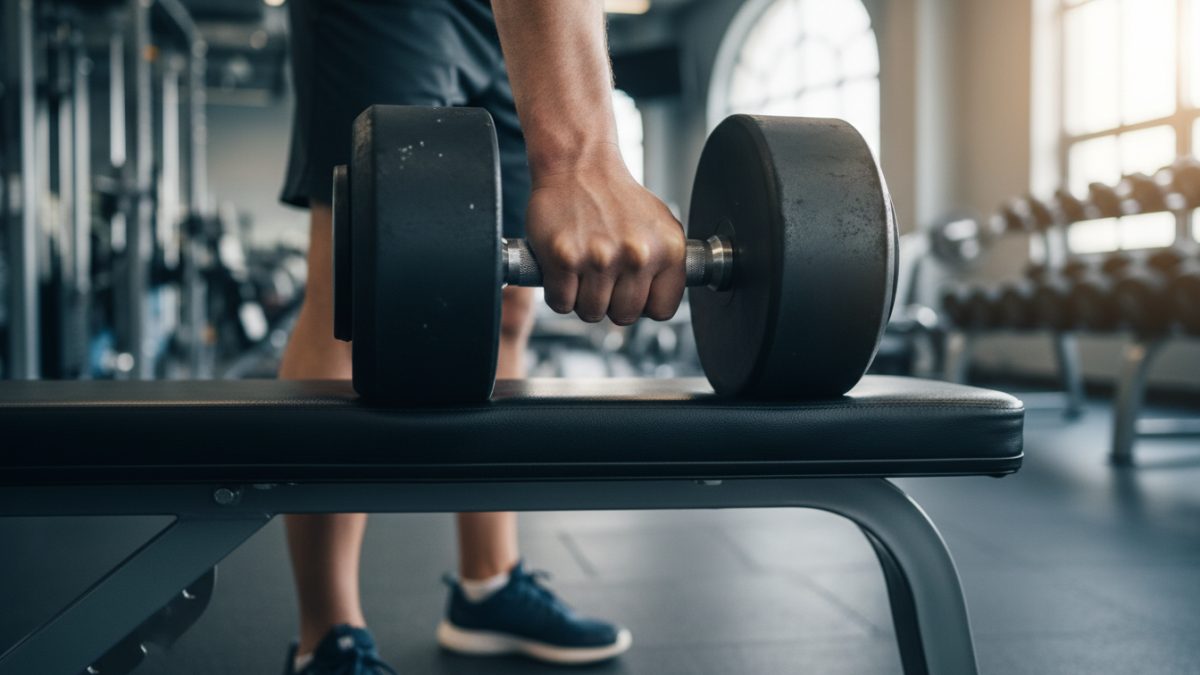
Most residential fitness centres share the same constraints: a rack of dumbbells running from 5 lb [2.25 kg] to 50 lb [22.5 kg], an adjustable bench, a dual-pulley cable machine, and rows of treadmills. Running an effective condo gym workout plan comes down to selecting movements that make modest loads feel heavy and knowing how to create mechanical tension without a barbell.
Training in a condo or apartment fitness room removes the friction of a winter commute, but it requires a different approach to exercise selection and loading. When you cannot simply add another 45 lb [20 kg] plate to a bar, you have to alter leverage, increase unilateral work, and manipulate your training density to keep building muscle.
Why standard gym routines fail in a condo gym
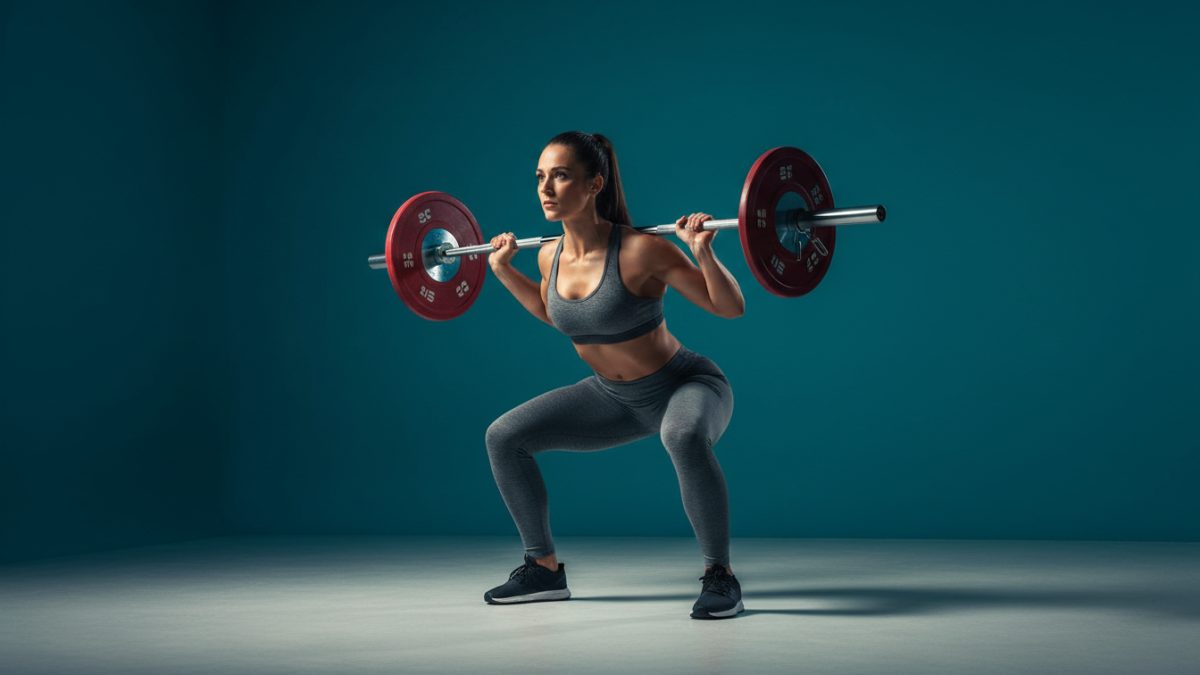
Commercial gym routines rely heavily on bilateral barbell movements like the back squat, conventional deadlift, and flat barbell bench press. These exercises require loading hundreds of pounds to reach the mechanical tension necessary for muscle growth once you move past the beginner stage.
When you try to copy those same routines in a condo facility, you hit immediate roadblocks:
- Goblet squats and dumbbell Romanian deadlifts quickly outgrow a 50 lb [22.5 kg] dumbbell.
- Dumbbell bench presses with fixed increments (often jumping by 5 lb [2.25 kg] per hand) make standard linear progression difficult.
- Cable attachments and pulleys often have varying resistance ratios (such as 2:1 or 4:1), meaning the number stamped on the weight stack rarely matches the actual load.
A realistic condo gym strategy often shifts some work away from heavy bilateral loading and puts more emphasis on single-limb movements, cable exercises, and rep quality so limited loads still feel challenging.
Essential exercise substitutes for limited equipment
You do not need a commercial power rack to challenge your major muscle groups. You can recreate every essential movement pattern by swapping traditional barbell lifts for demanding dumbbell, bodyweight, and cable variations.
Squat pattern alternatives
Instead of loading a bar on your spine, shift the workload to one leg at a time. This multiplies the effective load of light dumbbells.
- Bulgarian split squats: Elevating your rear foot on a flat bench shifts most of the work to the front leg. Holding moderate dumbbells can make these brutally hard even when the condo gym tops out at 50 lb [22.5 kg] per hand.
- Deficit reverse lunges: Stepping off a low riser or step platform increases the range of motion at the hip, which can make moderate dumbbell loads more challenging for the glutes and quads.
- Heels-elevated dumbbell goblet squats: Placing your heels on small 5 lb [2.25 kg] plates allows a deeper knee flexion angle, directing tension straight to the quadriceps even with a light dumbbell held at your chest.
Hinge pattern alternatives
Barbell deadlifts demand heavy loads, but targeted posterior chain training does not.
- Single-leg dumbbell Romanian deadlifts (RDLs): Balancing on one working leg while holding a dumbbell in the opposite hand forces the hamstring and glute to stabilise and produce force through a full stretch.
- B-stance (kickstand) dumbbell RDLs: Keeping the non-working toe lightly on the floor removes balance as the limiting factor while placing more of the work on the front leg than a standard two-leg RDL.
- Cable pull-throughs: Setting the cable pulley low and using a rope attachment keeps continuous tension on the glutes throughout hip extension without loading the spine.
Pressing and pulling alternatives
To challenge the upper body without heavy barbells, focus on stable bodyweight positions and dual-cable setups.
- Push-up variations and dips: Performing push-ups with your hands on stable dumbbells or push-up handles can increase range of motion if the setup feels secure. If your building has a dip station and dips feel good on your shoulders, they can be a useful chest-and-triceps option.
- Single-arm half-kneeling cable presses: Pressing from a half-kneeling stance forces your core to stabilise rotational forces while targeting the chest and anterior shoulder.
- Chest-supported dumbbell rows: Setting an adjustable bench to a 30-degree incline and lying prone eliminates torso swing, making a pair of 40 lb [18 kg] dumbbells feel significantly harder than loose standing rows.
- Dual-cable pulldown-style rows and seated rows: Independent cable handles let your wrists rotate naturally into a comfortable grip, which many lifters find friendlier on the shoulders and elbows while training the lats and upper back.
The 4-day condo gym workout routine
An upper/lower split is the most balanced schedule for condo gym equipment. It trains each muscle group twice every seven to eight days while allowing sufficient recovery between sessions.
Take 120 to 150 seconds of rest between sets on compound movements, and 60 to 90 seconds on isolation exercises. Keep 1 to 2 reps in reserve (RIR) on all working sets.
| Day | Exercise | Muscle target | Sets | Target reps |
|---|---|---|---|---|
| Upper A | Incline dumbbell bench press | Chest, shoulders | 4 | 8–10 |
| Chest-supported dumbbell row | Upper back, lats | 4 | 8–10 | |
| Standing single-arm cable lateral raise | Side delts | 3 | 12–15 | |
| Half-kneeling cable lat pulldown | Lats | 3 | 10–12 | |
| Incline dumbbell curl | Biceps | 3 | 10–12 | |
| Overhead cable triceps extension | Triceps | 3 | 12–15 | |
| Lower A | Bulgarian split squat | Quads, glutes | 4 | 8–10 |
| B-stance dumbbell Romanian deadlift | Hamstrings, glutes | 4 | 8–10 | |
| Heels-elevated goblet squat | Quads | 3 | 12–15 | |
| Single-leg standing dumbbell calf raise | Calves | 3 | 12–15 | |
| Cable rope crunch or hanging knee raise | Core | 3 | 12–15 | |
| Upper B | Flat dumbbell bench press | Chest, triceps | 4 | 8–10 |
| Neutral-grip cable seated row | Mid back, lats | 4 | 8–10 | |
| Dumbbell seated overhead shoulder press | Shoulders, triceps | 3 | 8–10 | |
| Cable chest fly (mid-pulley height) | Chest | 3 | 12–15 | |
| Rope hammer curl | Biceps, forearms | 3 | 10–12 | |
| Cable triceps pressdown | Triceps | 3 | 10–12 | |
| Lower B | Dumbbell Romanian deadlift (both legs) | Hamstrings, glutes | 4 | 10–12 |
| Deficit reverse lunge (dumbbells at sides) | Quads, glutes | 3 | 10–12 | |
| Cable pull-through | Glutes, hamstrings | 3 | 12–15 | |
| Dumbbell step-up (to bench or box) | Quads, glutes | 3 | 10–12 | |
| Plank or ab wheel rollout | Core | 3 | 45–60 s |
How to progress when weights stop at 50 lb
When you can no longer pick up a heavier dumbbell, adding weight to the bar is off the table. Muscle growth is triggered by mechanical tension, which can be created through methods other than raw load.
1. The double progression method
Work within a rep bracket (such as 8 to 12 reps). Start at a weight where you can achieve 4 sets of 8 clean reps. Keep that exact load until you can complete 4 sets of 12 reps with crisp technique. Only then move up to the next dumbbell increment.
2. Controlled eccentric tempo and pauses
Slowing down the lowering portion of a lift can increase the challenge without adding external load. Try using a 3-second lowering phase followed by a 1-second pause near the stretched position on movements like split squats, incline presses, and RDLs. This should complement progressive overload, not replace it.
3. Mechanical drop sets and rest-pause sets
When isolation movements become too light, extend the set past initial fatigue:
- Rest-pause sets: Take a set of lateral raises to near failure at 15 reps, rest for 15 seconds, perform 4 more reps, rest 15 seconds, and complete 3 final reps.
- Mechanical drop sets: Perform a safer pairing, such as lateral raises followed immediately by a partial-range lateral raise, or incline presses followed by flat presses with the same dumbbells.
Structuring volume and progression with FitroLab
Balancing your weekly workload across the equipment you actually have can help you make progress without overdoing any one movement pattern. If you use FitroLab, its plan builder can organize a condo-gym program around your available equipment using muscle-building defaults of 4 sets of 6 to 10 reps for compound lifts with 150 seconds of rest, and 3 sets of 10 to 15 reps for isolation work with 90 seconds of rest.
It can also distribute weekly working sets across muscle groups within its usual targets: chest 8 to 20, back 10 to 24, shoulders 8 to 20, arms 8 to 20, legs 12 to 36, and core 3 to 16.
Adapting for bare-bones vs well-equipped residential gyms
Residential gyms vary widely depending on the age and size of your building. Adjust your weekly exercise selection based on what is in front of you:
- If you have no cable stack: Replace cable flyes with dumbbell floor presses or push-up variations, cable pulldown patterns with pull-ups if a stable bar is available, and cable pressdowns with close-grip push-ups.
- If your dumbbells only go up to 30 lb [13.5 kg]: Shift all lower body compound work strictly to unilateral exercises (single-leg squats, Bulgarian split squats, single-leg RDLs) and increase your rep targets to 12 to 20 reps per set.
- If you have a functional trainer with adjustable pulleys: Take full advantage of continuous tension on lateral raises, chest flyes, rear delt flyes, and triceps work, as cables provide a smooth resistance curve that free weights cannot replicate.
Frequently asked questions
Can you build significant muscle using only a condo gym?
Yes, for most people. You can build muscle with a condo gym if your exercises are hard enough, you perform enough weekly work, and you gradually make that work more demanding over time. That can mean adding reps, improving control, using more challenging variations, or increasing load when equipment allows.
What should you do when you max out the heaviest dumbbells on bench press?
When the heaviest dumbbells (often 50 lb [22.5 kg]) become too light for standard flat pressing, switch to unilateral dumbbell pressing, increase the incline slightly to place more load on the upper chest and shoulders, or pre-exhaust your chest with a set of cable flyes immediately before your dumbbell press sets.
How often should you change exercises in a limited-equipment gym?
Stick with the same core exercises for at least 8 to 12 weeks. Changing movements too frequently makes it difficult to track objective progression in reps and control. Only swap an exercise if it causes joint discomfort or if you have completely exhausted all progression variables for that movement.
If you want a tailored routine that matches your specific dumbbell weights and available attachments, an app like FitroLab can help organize the exercises, sets, reps, and rest periods into a personal plan.
This article was written with AI and checked by an automated editor. It is general information, not medical advice: talk to a health professional before starting a new training or nutrition plan. How we write our articles