Strength Training Plateau: Why Your Lifts Stopped Moving
· 7 min read
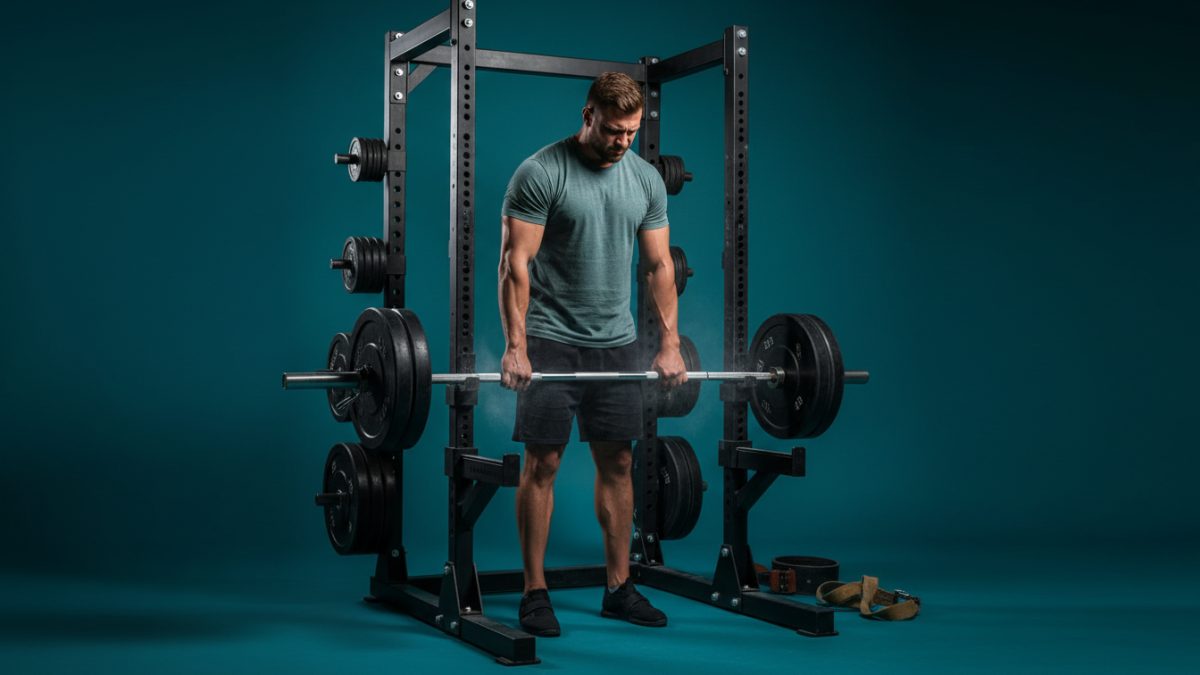
When your barbell weights and dumbbell reps stop progressing, grinding harder rarely works. Here are the five real causes of a strength plateau and how to fix them.
You walk into the weight room, load the barbell, and grind through the exact same reps you completed a month ago. Hitting a strength training plateau can make months of hard effort feel wasted, even when you train consistently every week. Stalled progress is almost never a sign that you have reached your genetic limit; it is simply feedback pointing to an error in load management, rest, volume, or nutrition.
Your rest periods are too short
The most frequent cause of a sudden halt in strength gains is rushing between heavy sets. When your goal is to build strength rather than chase metabolic fatigue, your nervous system and cellular energy stores dictate how much weight you can move.
How to check: Look at the timer on your watch or phone between your hardest sets. If you regularly step back under the bar after 60 to 90 seconds because you feel restless, this is likely your bottleneck. Another clear sign is a steep drop-off across your working sets. For example, if you manage 5 clean reps on your first set of squats at 225 lb (102 kg), but your second set drops to 3 reps and your third feels like an absolute grind, your muscles have not recovered enough energy to produce maximal force.
The fix: Heavy compound exercises like squats, presses, rows, and deadlifts usually need longer rest than most people expect. Give yourself about 3 minutes of genuine rest between working sets on your primary lifts. For single-joint isolation work, such as dumbbell curls or lateral raises, 90 to 120 seconds is usually enough. In FitroLab, the default strength setup is 180 s of rest on compound lifts and 120 s on isolation exercises, paired with 5 x 4-6 reps on main lifts. Sitting still for three minutes might feel slow, but it often helps you keep performance steady across sets instead of turning a strength session into a conditioning test.
Making load increases that are too large
Many lifters stall because they attempt weight jumps that exceed the body's rate of adaptation, particularly on upper-body movements.
How to check: Review your recent training notes or the weights you remember using over the last few weeks. If you completed your target reps with 135 lb (61 kg) on the overhead press and immediately added 10 lb (4.5 kg) total next session, that jump may have been too aggressive. On dumbbell movements, going from 25 lb (11.5 kg) dumbbells to 30 lb (13.5 kg) is a 20% increase in resistance. If you regularly miss reps as soon as you increase the load, the jump is probably too steep for where you are right now.
The fix: Adopt double progression instead of forcing linear weight jumps every week. Pick a rep target with a small spread, such as 4 to 6 reps for main lifts or 8 to 12 reps for accessories. Keep the load identical until you can complete all prescribed sets at the top number of that rep bracket with solid control. Only then do you increase the weight by the smallest increment available. On barbells, use 2.5 lb (1 kg) plates so the total jump is only 5 lb (2.2 kg). If your gym has fractional plates, a 2 lb (0.9 kg) total increase on an overhead press or bench press can keep progress moving for months when larger plates cause an immediate brick wall.
Accumulating systemic fatigue from excessive volume
Training with high effort is necessary to get stronger, but piling on too many sets creates fatigue that masks your true strength.
How to check: Pay attention to how the bar feels during your warm-up sets. If weights that normally feel light and snappy suddenly feel heavy in your hands, or if your grip gives out prematurely during deadlifts and rows, your body is carrying excessive fatigue. Other common signs include lingering joint tenderness in your knees or elbows, restless sleep, and a general lack of enthusiasm when arriving at the gym.
The fix: Reduce your total working volume to let your nervous system and connective tissues catch up. If you are doing 5 or 6 different exercises per muscle group each workout, strip your session back to 3 or 4 focused movements. Aim for roughly 10 to 16 working sets per major muscle group per week, keeping 1 to 2 reps in reserve on most sets rather than training to absolute failure every time. If you have been lifting heavy for 8 to 12 weeks without a break, schedule a deload week: cut your total sets in half and reduce your working weights by about 10% to 20%. When you return the following week, accumulated fatigue will have dissipated, and your baseline strength will often feel refreshed.
You are not eating enough to support strength progress
Producing high levels of force requires cellular energy. If your daily food intake does not support the demands of your training, your body will preserve its resources rather than building denser muscle fibres and stronger connective tissue.
How to check: Step on the scale over a three-week period and examine your average trend. If your body weight is steadily dropping while your lifts are stalled, you may not be taking in enough energy to support strength gains. You may also notice that you run out of energy halfway through your workout. If your body weight has stayed the same, food intake may still be part of the issue, but so could programming, recovery, or technique.
The fix: Ensure you are consuming enough total food, with adequate protein and carbohydrates. Aim for 1.6 to 2.2 g of protein per kilogram of body weight (0.7 to 1.0 g per lb) daily, drawing from foods such as lean meats, fish, eggs, Greek yogurt, or tofu. Many people also perform better when they include carbohydrate before training; a meal with a solid carbohydrate source such as oats, rice, potatoes, or fruit 60 to 90 minutes before your workout is a practical place to start. If you are currently in a calorie deficit to lose fat, expect strength gains to be slower or limited. If your main goal is to move heavier weight, a small calorie increase can help, but adjust based on your body weight trend, appetite, and recovery rather than forcing a fixed number.
Your technique changes when the weight gets heavy
As the weight on the bar creeps upward, subtle technical flaws magnify. What passes as acceptable form at moderate weights can completely halt your progress when the load demands mechanical efficiency.
How to check: Set up your phone at waist height and record your heaviest working sets from a 45-degree angle. Compare your top set against your warm-up sets. Are your hips shooting up early on squats, turning the lift into an unplanned good morning? Are your elbows flaring out wide on the bench press? Are you cutting depth on your leg presses by two inches to convince yourself the weight is moving? If your movement path changes noticeably between light and heavy weights, your technique is leaking force.
The fix: Take 10% to 15% off the bar for a few sessions and re-establish repeatable mechanics. Focus on creating full-body tension before initiating the lift: brace your core, root your feet into the floor, and grip the bar tightly. A short pause can also help on some lifts. For example, a 1-second pause on the bench press or goblet squat can show you whether you are losing position and help you rebuild control at the hardest part of the range of motion.
What to do if nothing has worked
If you have lengthened your rest periods, managed your volume, adjusted your nutrition, and polished your technique for 4 to 6 continuous weeks without seeing a single rep or pound added, take a step back and examine your daily recovery outside the gym. Chronic psychological stress, less than 7 hours of uninterrupted sleep, and prolonged sitting at a desk can suppress force production far more than most lifters realize.
Take five to seven days away from heavy lifting, or keep training with much lighter loads and fewer sets for a week. Stay active with walks, light mobility work, and balanced meals, then restart with slightly reduced loads and build back up. However, if your plateau comes with sharp joint pain, persistent tendon irritation, numbness, or weakness, do not try to push through it. Book an appointment with a registered physiotherapist or a medical doctor before resuming heavy resistance training.
If you want a structured routine with the sets, reps, and rest periods already laid out, FitroLab can build a personalized training plan.
This article was written with AI and checked by an automated editor. It is general information, not medical advice: talk to a health professional before starting a new training or nutrition plan. How we write our articles