Meal Prep for Muscle Gain: 5-Step Weekly Guide
· 8 min read
A step-by-step system to batch cook high-protein, calorie-sufficient meals for the week so you hit your muscle-building targets without cooking every day.
Cooking three or four high-protein meals from scratch every day is the easiest way to fall short of your calorie and protein targets when life gets busy. By the end of this guide, you will have a repeatable weekly cooking system, a simple grocery template, and four days of balanced lunches and dinners ready in your fridge.
1. Calculate your daily calories and protein floor
Before shopping, establish exact numbers instead of guessing portion sizes. Building lean tissue requires both adequate amino acids and sufficient energy to fuel training and recovery.
What to do
Set your daily calorie intake to a modest surplus of 200 to 400 calories above maintenance, and set your daily protein target between 0.7 and 1.0 g per lb of body weight (1.6 to 2.2 g per kg). For example, a lifter weighing 175 lb (79 kg) who maintains on 2,500 calories would aim for roughly 2,750 to 2,900 calories and 140 to 175 g of protein per day.
How to do it
Track what you eat normally for three days using a food scale to find your true baseline if you do not know your maintenance level. Divide your daily protein target across three to five eating occasions so each meal provides at least 30 to 45 g of protein.
How to know it is done right
You have two clear daily numbers written down: total calories and total protein in grams. These numbers dictate how many grams of raw meat, grains, and fats you must purchase for the week.
2. Select two versatile protein sources and batch cook them
Cooking four different meats on a Sunday afternoon creates kitchen chaos and excess dishes. Sticking to two primary proteins keeps cooking time under 45 minutes.
What to do
Choose one lean poultry or fish source and one red meat or richer poultry option. Good pairings include extra-lean ground beef (90% to 93% lean) and boneless chicken breast, or pork tenderloin and canned wild salmon.
How to do it
Season each protein with simple, neutral bases like garlic powder, onion powder, smoked paprika, salt, and black pepper. Cook them using hands-off methods:
- Sheet-pan chicken breast: Dice into bite-sized pieces, toss with 15 ml of olive oil and spices, and bake at 200°C for 18 to 22 minutes, checking that the centre reaches 74°C.
- Skillet ground beef or turkey: Brown 1 kg of meat in a large stainless steel or non-stick pan over medium-high heat, drain excess rendered liquid, and stir in your spices.
How to know it is done right
You have cooked, seasoned protein cooling on the counter, with enough total yield to cover your planned weekday lunches and dinners (typically 700 to 1,000 g of cooked meat total for four days).
3. Prepare complex carbohydrate bases in bulk
Carbohydrates replenish glycogen stores and provide the sustained energy required for hard gym sessions. Pre-cooking stable starches is the backbone of efficient meal prep for muscle gain.
What to do
Cook one or two starchy carbohydrate sources that hold texture well when refrigerated for a few days. Jasmine or basmati rice, quinoa, roasted baby potatoes, or pasta cooked al dente can all work; choose the options you will actually eat.
How to do it
Use a rice cooker or large pot for grains: combine 400 g of dry white basmati rice with water and a pinch of salt to yield roughly 1,000 g of cooked rice. For roasted potatoes, wash 1 kg of baby potatoes, halve them, toss with 10 ml of oil, salt, and rosemary, and roast on a baking sheet at 200°C (400°F) for 30 minutes until fork-tender.
How to know it is done right
Your carbohydrates are tender but not overcooked. Spread them onto a baking sheet or wide dish for 10 minutes to let steam escape before portioning; trapping hot steam inside airtight containers leads to watery, spoiled meals by day three.
4. Assemble balanced containers with colour and dietary fats
Dry, flavourless prep meals get abandoned for takeout by Wednesday. Balancing texture, vegetables, and added fats ensures your meals taste good and deliver micronutrients.
What to do
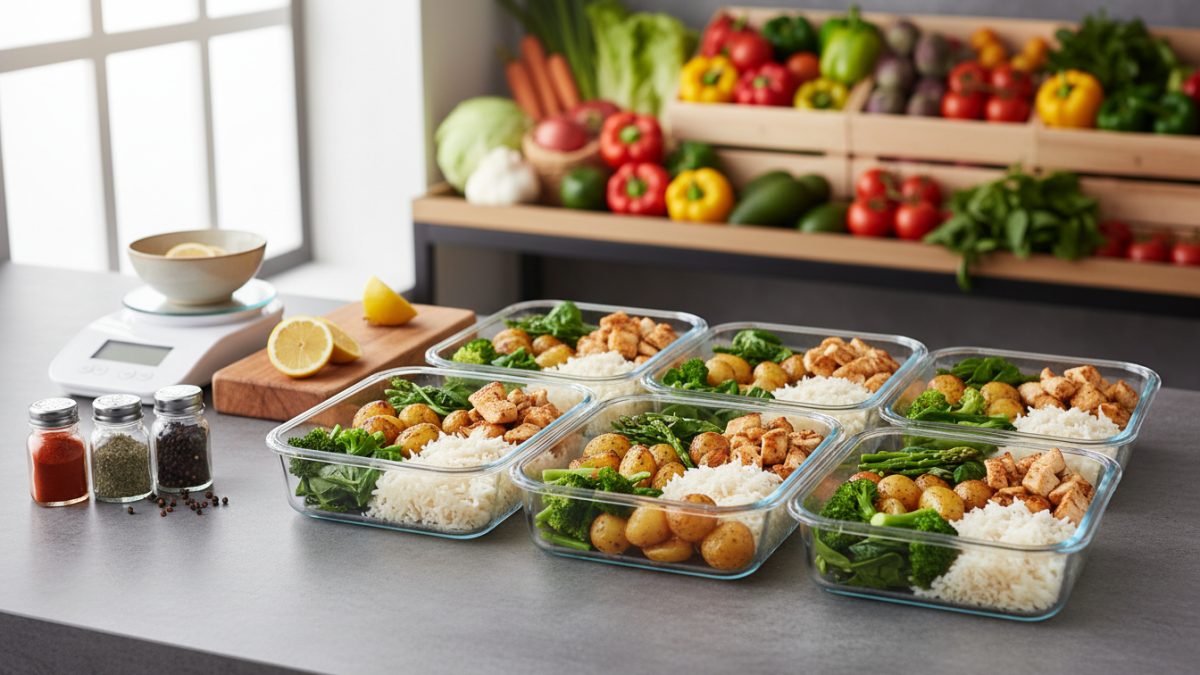
Assemble four to eight airtight glass containers by combining your pre-weighed protein, carbohydrate base, cooked or raw vegetables, and a measured fat source.
How to do it
Weigh your cooked ingredients directly into each container using a kitchen scale. Add hardy vegetables that survive reheating, such as roasted broccoli florets, green beans, or sliced bell peppers. Incorporate dietary fats that boost calories without overwhelming volume: a quarter of an avocado added fresh on the day, 15 g of pumpkin seeds, or a drizzle of olive oil.
| Container | Protein (Cooked) | Starch (Cooked) | Vegetable | Added Fat / Flavour | Approx. Macros |
|---|---|---|---|---|---|
| Lunch A (x2) | 160 g chicken breast | 200 g basmati rice | 100 g steamed green beans | 15 ml teriyaki sauce + 10 g sesame seeds | 520 kcal, 48 g P, 60 g C, 10 g F |
| Lunch B (x2) | 160 g extra-lean ground beef | 220 g roasted baby potatoes | 100 g roasted bell peppers | 30 g salsa + 20 g light sour cream | 560 kcal, 44 g P, 48 g C, 18 g F |
| Dinner A (x2) | 170 g chicken breast | 220 g basmati rice | 100 g roasted broccoli | 15 ml olive oil dressing | 580 kcal, 50 g P, 66 g C, 14 g F |
| Dinner B (x2) | 170 g extra-lean ground beef | 240 g roasted baby potatoes | 100 g green beans | 15 g grated parmesan cheese | 610 kcal, 46 g P, 52 g C, 22 g F |
How to know it is done right
Every container has a clear macronutrient profile that matches your meal targets. You can clearly identify 40 to 50 g of protein in each serving.
5. Build quick, no-cook morning and snack anchors
Meal prep does not mean packing every single bite into plastic containers on Sunday. Trying to cook five days of eggs or oatmeal in advance often results in unappetising breakfasts.
What to do
Keep your breakfasts and mid-day snacks fresh by stocking high-protein ingredients that take under three minutes to assemble on the day.
How to do it
Use these reliable anchors to hit your remaining calorie and protein goals:
- Greek yogurt bowls: 250 g of 2% plain Greek yogurt (roughly 24 g protein), 40 g of rolled oats or granola, 100 g of frozen Canadian wild blueberries, and 20 g of natural peanut butter.
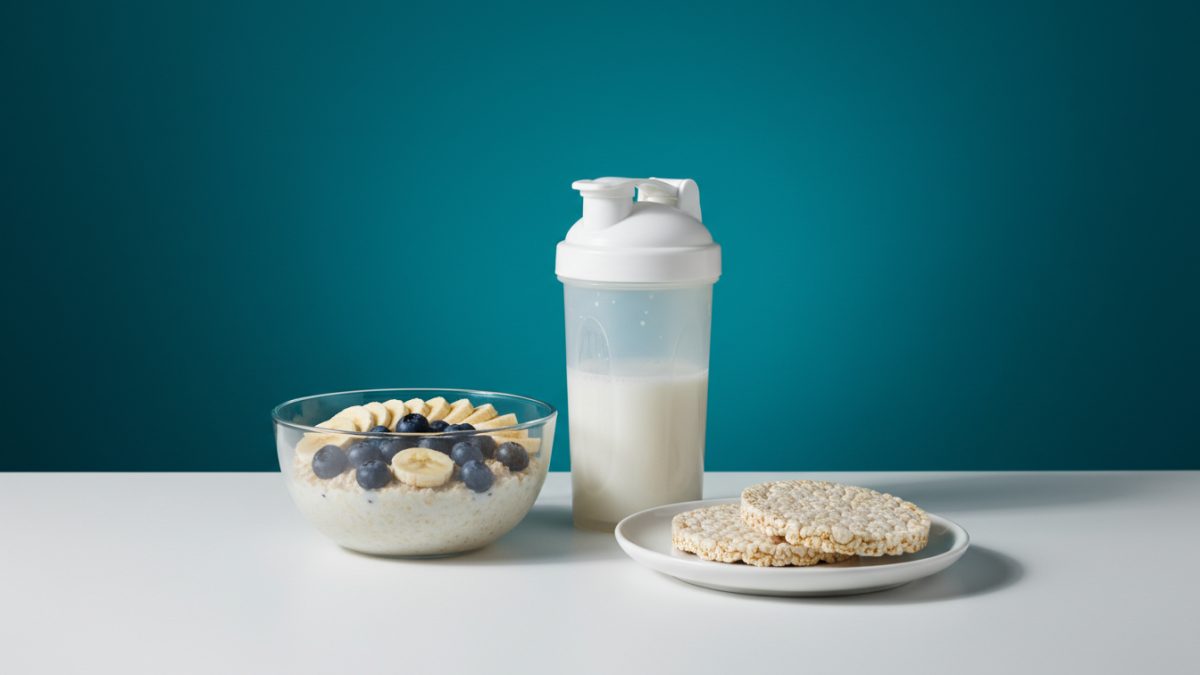
- Overnight oats: Mix 60 g of large-flake oats, 250 ml of dairy or soy milk, 30 g of whey or plant protein powder, and 15 g of chia seeds in a jar. Leave in the fridge overnight.
- Quick protein top-ups: Hard-boiled eggs, single-serving cottage cheese cups (1% or 2% M.F.), and mixed raw almonds.
How to know it is done right
Your refrigerator has enough grab-and-go snack items and dairy bases that you can reach your daily protein goal even if your schedule shifts or you need to eat on the move.
6. Store and rotate meals safely
Food quality drops rapidly if stored incorrectly, leading to food waste and skipped meals.
What to do
Keep three days of prepared meals in the coldest part of your fridge (at or below 4°C) and place anything intended for day four and beyond into the freezer immediately after cooling.
How to do it
Let your cooked meals cool to room temperature for no longer than 60 minutes before sealing and chilling. If you prep for five full workdays on Sunday, place Thursday and Friday meals in the freezer. Move them to the refrigerator on Tuesday night so they thaw gradually before reheating.
How to know it is done right
Your food tastes fresh throughout the week, meats retain moisture without turning rubbery, and you never have to discard spoiled food.
Consistency with your daily nutrition makes muscle gain easier because your meals are ready before the week gets hectic. A simple prep routine takes some planning up front, but it can save time and make it easier to hit your calorie and protein targets. If you want personal calorie and protein targets with meal-planning support, FitroLab can help you set them up and adjust them as your body weight changes.
Frequently asked questions
Should I weigh meat raw or cooked when prepping for muscle gain?
Weighing meat raw is more accurate because cooking time and temperature change how much water evaporates from the cut. If a recipe or plan calls for 150 g of raw chicken breast, weigh it before it enters the pan. If you must weigh cooked meat from a batch container, note that cooked meat loses roughly 20% to 25% of its weight in water, meaning 120 g of cooked chicken equals roughly 150 g of raw chicken.
How do I stop reheated chicken breast from drying out?
Cook chicken breast whole or in large chunks rather than small slivers to retain internal moisture, and stop cooking once the centre reaches 74°C. When reheating in a microwave, add 15 ml of water or broth to the container, cover it with a loose lid or damp paper towel, and reheat at 70% power for 90 to 120 seconds instead of full power.
How many days in advance is it safe to keep cooked meat in the fridge?
According to Health Canada food safety guidelines, cooked meats and poultry remain safe in the refrigerator at 4°C or colder for three to four days. If you cook your meals on Sunday afternoon, eat the refrigerated portions through Wednesday or Thursday lunch, and freeze any meals intended for Thursday dinner and Friday.
Free calculators for this topic
This article was written with AI and checked by an automated editor. It is general information, not medical advice: talk to a health professional before starting a new training or nutrition plan. How we write our articles